
Empowering businesses with innovative tech for growth and global success
Copyright © Web3tech Network. All rights reserved.
Empowering businesses with innovative tech for growth and global success
( Home / Blog )

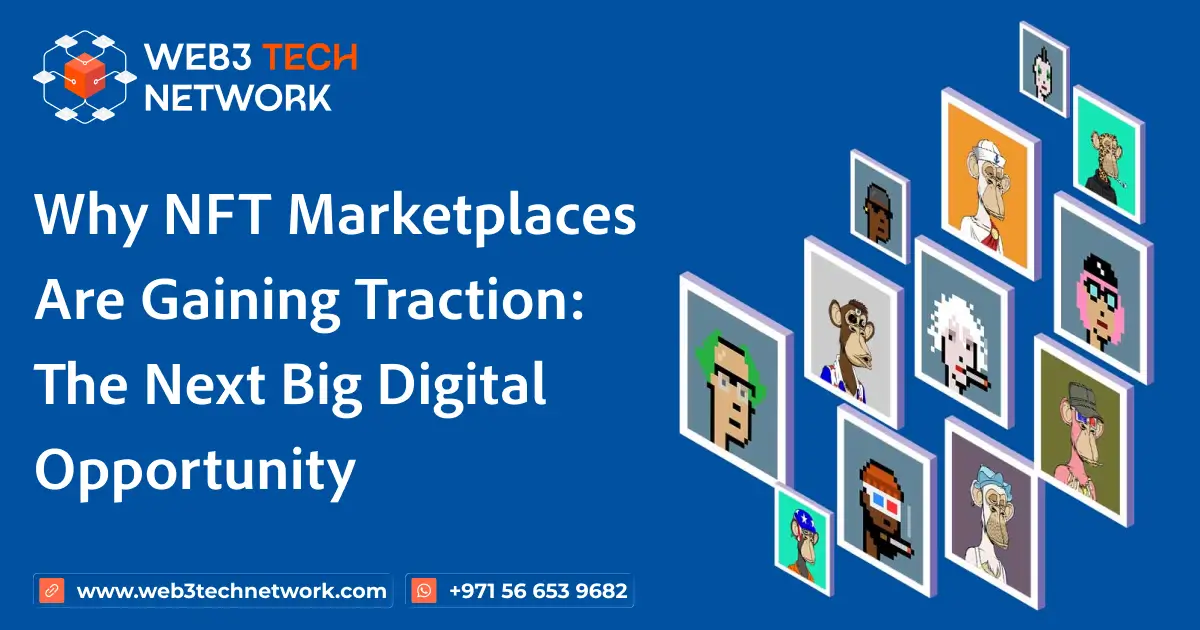
The digital economy is evolving at an unprecedented pace, and one of the most transformative innovations driving this shift is the rise of NFT marketplaces. As businesses, creators, and investors explore new revenue streams, digital assets such as NFTs (non-fungible tokens) are emerging as a powerful tool for ownership, monetization, and community engagement. At Web3tech Network, we closely follow emerging technologies shaping the future of Web3. In this comprehensive guide, we explore why NFT marketplaces are gaining traction, how blockchain marketplaces are redefining ownership, and why this represents the next big digital opportunity. What Are NFT Marketplaces? NFT marketplaces are online platforms built on blockchain technology where users can create, buy, sell, and trade NFTs. These NFTs represent unique digital assets, including: Digital art Music Virtual real estate Gaming items Domain names Digital collectibles Unlike cryptocurrencies such as Bitcoin or Ethereum, NFTs are unique and cannot be exchanged on a one-to-one basis. Each NFT carries distinct metadata and ownership records secured on a blockchain. Why NFT Marketplaces Are Gaining Traction 1. True Digital Ownership Traditional digital files can be copied infinitely. NFTs change that. By leveraging blockchain technology, NFT marketplaces ensure: Verifiable ownership Immutable transaction history Transparent scarcity Creator royalties This shift from access to ownership is fueling the rapid growth of blockchain marketplaces. 2. Explosion of Digital Collectibles The demand for digital collectibles has skyrocketed. From rare artworks to limited-edition virtual items, collectors are increasingly investing in NFTs. High-profile collections like Bored Ape Yacht Club and CryptoPunks have demonstrated the massive potential of digital collectibles, generating millions in sales and building thriving online communities. The appeal lies in: Exclusivity Community membership Resale potential Cultural value 3. Creator Economy Empowerment NFT marketplaces empower creators by eliminating intermediaries. Artists, musicians, and content creators can: Mint NFTs directly Set royalty percentages Engage with global buyers Build decentralized communities For example, artists like Beeple have demonstrated the earning power of NFTs, with record-breaking digital art sales that transformed perceptions of digital assets. This direct-to-consumer model is redefining how creative professionals monetize their work. 4. Integration with Blockchain Ecosystems NFT marketplaces are deeply integrated with blockchain ecosystems such as Ethereum, Solana, and Polygon. This integration provides: Smart contract automation Enhanced security Reduced transaction costs Interoperability across platforms As blockchain marketplaces evolve, scalability improvements and layer-2 solutions are further accelerating adoption. 5. Brand Adoption and Corporate Entry Major global brands are entering the NFT space to connect with digital-native audiences. Companies such as Nike and Adidas have launched NFT initiatives, demonstrating how digital assets can: Strengthen brand loyalty Unlock new revenue streams Create immersive experiences Drive community engagement Corporate adoption is legitimizing NFT marketplaces as a serious digital infrastructure. 6. Gaming and Metaverse Expansion NFT marketplaces play a critical role in blockchain-based gaming and the metaverse. Virtual worlds like Decentraland and The Sandbox allow users to own virtual land, avatars, and in-game items as NFTs. Gamers can: Trade assets freely Earn through play-to-earn models Maintain ownership across platforms This new digital economy model is reshaping online entertainment. Economic Impact of NFT Marketplaces The rapid expansion of NFT marketplaces is influencing multiple industries: Industry NFT Impact Art Direct artist monetization Music Royalty automation Real Estate Tokenized property ownership Gaming Play-to-earn economies Fashion Digital wearables & collectibles The convergence of blockchain marketplaces and digital assets is unlocking new investment categories and redefining asset ownership. The Role of Web3tech Network in the NFT Ecosystem At Web3tech Network, we believe NFT marketplaces are more than a trend—they represent foundational infrastructure for Web3 innovation. Our focus includes: Analyzing emerging NFT platforms Tracking digital asset adoption trends Exploring blockchain marketplace technologies Educating businesses on NFT integration Supporting decentralized innovation As the Web3 ecosystem expands, Web3tech Network is committed to helping brands and entrepreneurs capitalize on the NFT opportunity. Challenges to Consider While NFT marketplaces offer enormous potential, businesses and investors should also consider: Market volatility Regulatory uncertainty Environmental concerns Platform security risks Intellectual property issues Sustainable growth will require improved compliance frameworks and user education. The Future of NFT Marketplaces The next phase of growth will likely include: Cross-chain interoperability NFT utility beyond collectibles Real-world asset tokenization AI-generated NFTs Enterprise-grade blockchain marketplaces As infrastructure matures, NFT marketplaces will move from speculative hype to practical utility-driven ecosystems. Why NFT Marketplaces Represent the Next Big Digital Opportunity NFT marketplaces are transforming how we: Define ownership Monetize creativity Build digital communities Trade digital assets Interact in virtual environments The convergence of NFTs, blockchain marketplaces, and digital collectibles is creating a decentralized digital economy with global participation. For businesses, creators, and investors, this represents a rare early-stage opportunity to participate in a technological shift comparable to the early internet era. Final Thoughts The rapid adoption of NFT marketplaces signals a fundamental change in digital commerce. From empowering creators to enabling true ownership of digital assets, NFTs are reshaping industries worldwide. At Web3tech Network, we see NFT marketplaces not as a passing trend, but as a cornerstone of the next-generation internet. As blockchain marketplaces continue to evolve, those who understand and embrace digital collectibles today will be best positioned to thrive in tomorrow’s digital economy.
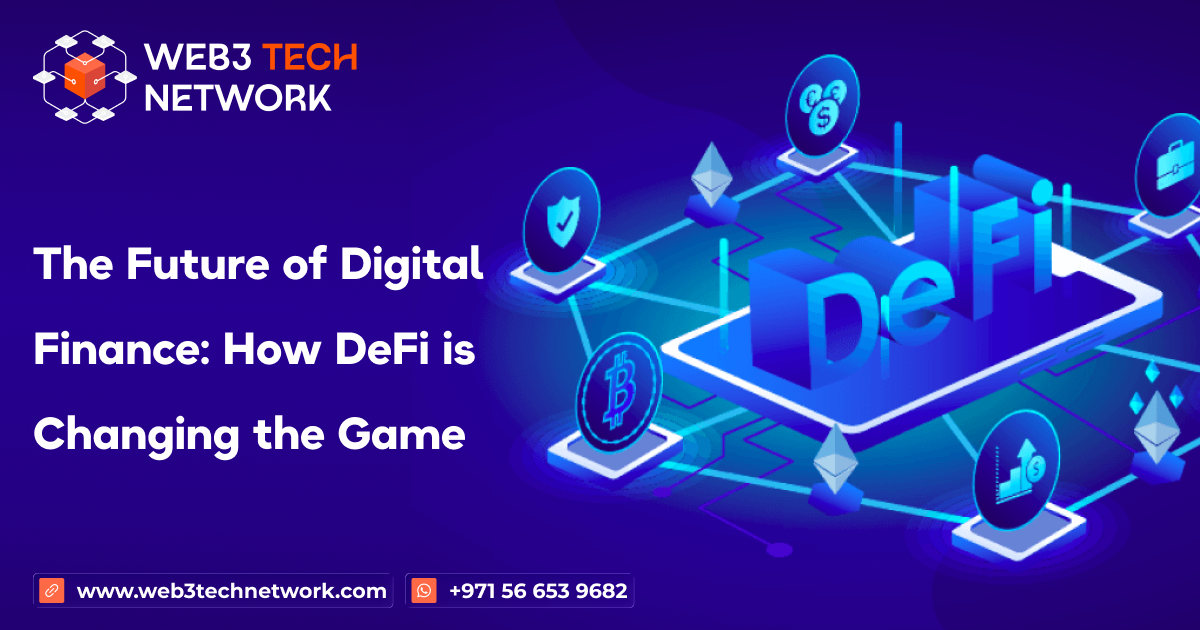
The world of digital finance is evolving at an unprecedented pace. Over the past decade, traditional banking systems have gradually integrated technology to improve efficiency and accessibility. However, a more radical transformation is now underway — one driven by decentralized finance (DeFi). Built on blockchain finance infrastructure, DeFi is redefining how individuals access loans, trade assets, earn interest, and transfer value globally. As innovation accelerates, the DeFi future looks increasingly disruptive, inclusive, and powerful. What Is Decentralized Finance (DeFi)? Decentralized finance (DeFi) refers to a financial ecosystem built on blockchain technology that operates without centralized intermediaries like banks or brokerage firms. Instead, transactions are executed through smart contracts — self-executing code deployed on blockchain networks. The rise of DeFi is closely linked to the development of Ethereum, which introduced programmable smart contracts. These contracts enable financial services such as lending, borrowing, trading, and yield farming to function automatically and transparently. In short, decentralized finance aims to replicate — and improve — traditional financial services using blockchain-based systems. The Role of Blockchain Finance in Digital Transformation At the heart of the DeFi revolution is blockchain finance. Unlike traditional financial systems that rely on centralized databases, blockchain networks offer: Transparency – All transactions are publicly verifiable. Security – Cryptographic mechanisms protect assets. Immutability – Records cannot be altered once confirmed. Accessibility – Anyone with an internet connection can participate. Blockchain finance removes intermediaries, reduces operational costs, and allows faster cross-border transactions. This fundamental shift is one of the primary drivers shaping the DeFi future. How DeFi Platforms Are Changing the Financial Landscape Modern DeFi platforms provide services that traditionally required banks, exchanges, or insurance companies. Some of the most influential platforms include: Uniswap – A decentralized exchange enabling peer-to-peer token trading. Aave – A lending protocol allowing users to borrow and lend digital assets. MakerDAO – A protocol that manages the stablecoin DAI. These DeFi platforms operate without traditional intermediaries. Instead of banks approving loans, smart contracts automatically execute transactions based on predefined conditions. Key Innovations Introduced by DeFi Platforms Permissionless Lending and BorrowingUsers can access capital without credit checks or lengthy approvals. Decentralized Exchanges (DEXs)Traders maintain full custody of their assets. Yield Farming & StakingInvestors earn rewards by providing liquidity. StablecoinsDigital currencies pegged to real-world assets reduce volatility risks. Together, these innovations are reshaping digital finance by empowering users with greater control and transparency. The Advantages of DeFi in Digital Finance 1. Financial Inclusion Traditional banking systems exclude billions worldwide. DeFi platforms only require a crypto wallet and internet access, making financial tools globally accessible. 2. Lower Costs By eliminating intermediaries, decentralized finance significantly reduces transaction and operational fees. 3. Transparency and Trust All blockchain finance transactions are recorded publicly, increasing accountability and reducing fraud potential. 4. Programmability Smart contracts enable automation, reducing human error and improving efficiency. Challenges Facing the DeFi Future Despite its rapid growth, the DeFi future is not without challenges: Regulatory Uncertainty – Governments worldwide are still determining how to regulate decentralized finance. Security Risks – Smart contract vulnerabilities can lead to exploits. Market Volatility – Crypto assets remain highly volatile. Scalability Issues – Network congestion can increase fees. Overcoming these barriers will be critical for DeFi to achieve mainstream adoption in digital finance. DeFi vs Traditional Finance: A Structural Shift Traditional Finance Decentralized Finance Centralized institutions Smart contracts Limited operating hours 24/7 availability Geographic restrictions Global access Manual processing Automated execution This structural shift highlights why many analysts believe decentralized finance represents the next evolutionary stage of digital finance. The DeFi Future: What Lies Ahead? The DeFi future is expected to bring: Greater institutional participation Improved cross-chain interoperability Enhanced security frameworks Integration with real-world assets Expansion into insurance, derivatives, and asset management Major financial institutions are already exploring blockchain finance solutions, signaling that DeFi is not merely a trend but a transformative movement. As infrastructure matures and regulations become clearer, decentralized finance could become a foundational layer of global digital finance systems. Conclusion The transformation of digital finance through decentralized finance is one of the most significant financial shifts of the 21st century. Powered by blockchain finance and innovative DeFi platforms, this new ecosystem offers transparency, accessibility, and efficiency that traditional systems struggle to match. While challenges remain, the trajectory of the DeFi future suggests a world where financial services are more open, automated, and globally inclusive. DeFi is not just changing the game — it is rewriting the rules of digital finance entirely.

In the fast-paced world of cryptocurrency, where innovation meets investment, launching a successful project demands more than just a groundbreaking idea. Enter the realm of ICO marketing companies, essential allies in your quest for visibility and success. As the digital landscape evolves, these specialized firms possess the expertise to craft compelling narratives and targeted campaigns that resonate with your audience. They not only amplify your project’s reach but also build trust within a skeptical market. Whether you're a seasoned player or a newcomer, leveraging an ICO marketing company can be the catalyst that propels your cryptocurrency initiative from obscurity to prominence. Discover how the right marketing strategies can transform your vision into a thriving reality. Unlocking success in the competitive crypto space starts here. Understanding ICOs: What They Are and Why They Matter Initial Coin Offerings (ICOs) have revolutionized the way startups and projects raise capital in the cryptocurrency space. Unlike traditional fundraising methods that rely on venture capitalists or bank loans, ICOs leverage blockchain technology to offer tokens to investors. These tokens can represent various utilities within the project, including access to a service, voting rights, or a share of future profits. This method democratizes the investment process, allowing anyone with internet access to partake in potentially lucrative ventures. < The significance of ICOs extends beyond mere fundraising. They provide a way for projects to build a community of early adopters and enthusiasts who believe in the vision and potential of the project. This community often plays a vital role in the project's success, offering feedback, spreading the word, and sometimes even contributing to the development. The decentralized nature of ICOs also means that projects can bypass traditional financial gatekeepers, which can be particularly beneficial for innovative ideas that might not fit conventional investment molds. < Despite their potential, ICOs come with their own set of challenges. Regulatory scrutiny, market volatility, and the risk of scams have made it imperative for projects to approach their ICO with a well-thought-out strategy. This is where ICO marketing companies come into play. By providing expertise and tailored marketing strategies, these firms help projects navigate the complex ICO landscape, ensuring they reach the right audience and achieve their fundraising goals. < The Role of ICO Marketing Companies in the Cryptocurrency Ecosystem ICO marketing companies are a cornerstone in the cryptocurrency ecosystem, bridging the gap between innovative projects and potential investors. Their primary role is to create and execute comprehensive marketing strategies that position a project in the best possible light. This involves a mix of market research, brand development, content creation, and strategic outreach to ensure the project gains visibility and credibility. < One of the key functions of an ICO marketing company is to craft a compelling narrative around the project. This narrative is not just about what the project does, but why it matters and how it stands out from the competition. By articulating the unique value proposition, these marketing firms help potential investors understand the project's potential and build trust. This storytelling aspect is crucial in a market where skepticism is high, and the stakes are even higher. < In addition to narrative building, ICO marketing companies play a pivotal role in community engagement. They leverage various digital marketing channels, including social media, email campaigns, and influencer partnerships, to create a buzz around the project. By fostering a sense of community and belonging, they help projects build a loyal following that can be instrumental in driving the ICO's success. < Key Services Offered by ICO Marketing Companies ICO marketing companies offer a wide range of services tailored to meet the specific needs of cryptocurrency projects. One of the most critical services is market research and analysis. Understanding the competitive landscape, identifying target demographics, and analyzing market trends are essential steps that inform the overall marketing strategy. This data-driven approach ensures that the marketing efforts are focused and effective. < Another vital service is brand development and positioning. Creating a strong, recognizable brand is crucial in the crowded cryptocurrency market. ICO marketing firms work on developing the project's visual identity, including logo design, website development, and other brand assets. They also craft messaging that resonates with the target audience, ensuring consistent communication across all platforms. < Content creation and distribution are also central to an ICO marketing strategy. From whitepapers and blog posts to video content and social media updates, these companies produce a variety of content that educates and engages potential investors. They also handle public relations, securing media coverage in reputable publications to enhance the project's visibility and credibility. Additionally, ICO marketing firms often manage community building and engagement, organizing events, webinars, and online discussions to foster a sense of community and keep the audience engaged. < Key Services Offered by ICO Marketing Companies ICO marketing companies offer a diverse range of services designed to propel a cryptocurrency project from obscurity to prominence. These services are tailored to address different aspects of the marketing funnel, ensuring a comprehensive approach to promotion and outreach. Some of the key services include strategic planning, content creation, social media management, public relations, and community engagement. Strategic planning is the foundation of any successful marketing campaign. An ICO marketing company begins by conducting a thorough analysis of the project, its goals, target audience, and competitive landscape. This analysis informs the development of a customized marketing strategy that outlines the key messages, channels, and tactics to be employed. The goal is to create a cohesive plan that aligns with the project’s objectives and maximizes its chances of success. Content creation is another critical service provided by ICO marketing companies. This involves producing high-quality, informative, and engaging content that effectively communicates the project’s value proposition. Content can take various forms, including blog posts, whitepapers, videos, infographics, and press releases. The aim is to educate potential investors, build credibility, and generate interest in the project. Effective content marketing also involves leveraging SEO techniques to ensure that the content reaches the intended audience. Social media management is essential in the digital age, where platforms like Twitter, LinkedIn, and Facebook play a significant role in shaping public opinion. ICO marketing companies manage the project’s social media presence, creating and curating content, engaging with followers, and monitoring trends. Public relations efforts involve establishing relationships with media outlets and influencers, securing coverage in reputable publications, and handling any crisis communication that may arise. Community engagement, often through platforms like Telegram and Discord, involves building and nurturing a loyal following, addressing concerns, and fostering a sense of belonging. Together, these services create a comprehensive marketing ecosystem that drives visibility, credibility, and ultimately, success. Benefits of Hiring an ICO Marketing Company Hiring an ICO marketing company offers several significant advantages that can make the difference between a successful and a failed ICO. One of the foremost benefits is access to specialized expertise. ICO marketing firms have a deep understanding of the cryptocurrency market and its nuances. They know what works and what doesn't, allowing them to craft strategies that are both innovative and effective. < Time efficiency is another critical benefit. Launching an ICO requires meticulous planning and execution, which can be incredibly time-consuming. By outsourcing the marketing efforts to a professional firm, project teams can focus on development and other core activities. This division of labor ensures that all aspects of the project receive the attention they deserve, ultimately leading to a more successful launch. < Furthermore, an ICO marketing company can significantly enhance a project's credibility. In a market rife with scams and failed projects, gaining the trust of potential investors is paramount. These firms have established relationships with media outlets, influencers, and industry experts, which they leverage to build a positive image for the project. A well-executed marketing campaign can instill confidence in investors, making them more likely to participate in the ICO. < How to Choose the Right ICO Marketing Company for Your Project Selecting the right ICO marketing company is a crucial decision that can impact the success of your project. The first step in this process is to conduct thorough research. Look for companies that have a proven track record of successful ICOs. Examine their portfolio, read client testimonials, and, if possible, speak to former clients to get a sense of their experience and effectiveness.< Another important factor to consider is the range of services offered. Different projects have different needs, so it's essential to choose a marketing firm that can provide a comprehensive suite of services tailored to your specific requirements. Whether you need help with market research, brand development, content creation, or community engagement, ensure that the company has the expertise and resources to deliver.< Transparency and communication are also key considerations. A good ICO marketing company should be transparent about its strategies, processes, and pricing. They should be willing to provide regular updates and reports, keeping you informed about the progress of your campaign. Effective communication is vital for a successful partnership, so choose a firm that values open and honest dialogue.< Case Studies: Successful ICOs and Their Marketing Strategies Examining successful ICOs and their marketing strategies can provide valuable insights into what works in the cryptocurrency space. One notable example is the ICO of Ethereum, which raised over $18 million in 2014. Ethereum's success can be attributed to its clear and compelling narrative, which articulated the revolutionary potential of decentralized applications. The project's whitepaper was also a critical element, providing a detailed and transparent explanation of the technology and its potential impact.< Another successful ICO is that of EOS, which raised a staggering $4 billion. EOS's marketing strategy focused heavily on community engagement and transparency. The project held numerous events and webinars to educate potential investors and foster a sense of community. They also maintained an active presence on social media, providing regular updates and engaging directly with their audience.< A more recent example is the ICO of Filecoin, which raised $257 million in 2017. Filecoin's success can be attributed to its strategic partnerships and media coverage. The project secured endorsements from reputable investors and organizations, which helped build credibility and trust. They also leveraged media coverage to reach a broader audience, ensuring that their message was heard by potential investors worldwide.< Common Challenges Faced by ICO Projects and How Marketing Can Help Launching an ICO comes with its fair share of challenges, many of which can be mitigated with effective marketing. One common challenge is regulatory scrutiny. Different countries have different regulations regarding ICOs, and navigating this complex landscape can be daunting. ICO marketing companies can help by providing guidance on compliance and ensuring that all marketing materials adhere to regulatory standards.< Another significant challenge is market competition. The cryptocurrency space is crowded, with new projects launching every day. Standing out in such a competitive market requires a well-crafted marketing strategy. ICO marketing firms use market research and analysis to identify unique selling points and craft messages that resonate with the target audience. This helps projects differentiate themselves and capture the attention of potential investors.< Building trust is another critical challenge. The cryptocurrency market has been plagued by scams and failed projects, making investors wary. An ICO marketing company can help build credibility through transparent communication, strategic partnerships, and media coverage. By creating a positive image and fostering trust, these firms can make investors more likely to participate in the ICO.< The Importance of Community Building in ICO Marketing Community building is a cornerstone of successful ICO marketing. A strong and engaged community can be a powerful asset, providing support, spreading the word, and contributing to the project's development. ICO marketing companies use various strategies to build and nurture a community, including social media engagement, events, and online discussions.< Social media is a vital tool for community building. Platforms like Twitter, Telegram, and Reddit allow projects to engage directly with their audience, providing updates, answering questions, and fostering discussions. ICO marketing firms use these platforms to create a sense of community and belonging, encouraging members to become advocates for the project.< Events and webinars are another effective way to build a community. By hosting events, projects can provide valuable information, answer questions, and engage with their audience in a more personal way. These events also create opportunities for networking and collaboration, further strengthening the community. ICO marketing companies often organize and promote these events, ensuring they reach the right audience and generate maximum engagement.< Future Trends in ICO Marketing The landscape of ICO marketing is continually evolving, with new trends and technologies shaping the way projects reach and engage their audience. One significant trend is the increasing use of artificial intelligence (AI) and machine learning. These technologies can analyze vast amounts of data to identify patterns and insights, allowing for more targeted and effective marketing strategies.< Another emerging trend is the use of decentralized marketing platforms. These platforms leverage blockchain technology to create transparent and trustless marketing ecosystems. They provide a way for projects to connect directly with their audience, bypassing traditional intermediaries and reducing costs. Decentralized marketing platforms also offer greater transparency, making it easier to track and verify the effectiveness of marketing campaigns.< Influencer marketing is also gaining traction in the ICO space. Influencers with large followings can help projects reach a broader audience and build credibility. ICO marketing companies are increasingly partnering with influencers to promote their projects, leveraging their reach and influence to drive engagement and investment. As the cryptocurrency market continues to grow, these trends are likely to play a significant role in shaping the future of ICO marketing.< Understanding the ICO Marketing Landscape In the realm of ICO marketing, one size does not fit all. The strategies employed need to be as dynamic and innovative as the projects they aim to promote. A comprehensive ICO marketing plan typically encompasses a variety of channels and techniques, each tailored to address specific aspects of the project and its target audience. These strategies can range from content marketing and search engine optimization (SEO) to more niche tactics like influencer collaborations and community building. Content marketing is a cornerstone of ICO promotion. Creating high-quality, informative, and engaging content helps in educating potential investors about the project’s vision, technology, and benefits. This content can take various forms, including blog posts, whitepapers, videos, and social media updates. SEO practices are essential to ensure that this content reaches the intended audience, improving the project’s visibility in search engine results and driving organic traffic to its website. Influencer marketing has gained significant traction in the crypto space. Collaborating with well-respected figures in the cryptocurrency community can provide a project with instant credibility and exposure. These influencers have built their reputations by providing valuable insights and analysis, and their endorsement can significantly sway the opinions of their followers. Additionally, building and nurturing a community around the project, often through platforms like Telegram, Discord, and Reddit, helps in fostering a sense of belonging and loyalty among supporters. An engaged community can be a powerful advocate for the project, spreading the word organically and providing valuable feedback. Conclusion: Investing in the Right Marketing for ICO Success In the fast-paced and competitive world of cryptocurrency, marketing is not just an option but a necessity for ICO success. An ICO marketing company brings specialized expertise, strategic insights, and a comprehensive suite of services that can propel a project from obscurity to prominence. By crafting compelling narratives, engaging with the community, and leveraging the right channels, these firms help projects reach their target audience and build the credibility needed to attract investors.< Choosing the right ICO marketing company requires careful consideration and research. It's essential to find a firm with a proven track record, a range of tailored services, and a commitment to transparency and communication. By partnering with the right marketing firm, projects can overcome common challenges, differentiate themselves in a crowded market, and build a loyal and engaged community.< As the cryptocurrency landscape continues to evolve, staying ahead of the curve with innovative marketing strategies will be crucial. From leveraging AI and machine learning to embracing decentralized marketing platforms and influencer partnerships, the future of ICO marketing holds exciting possibilities. By investing in the right marketing strategies, projects can unlock their full potential and achieve lasting success in the dynamic world of cryptocurrency.<

In the ever-evolving digital landscape, a Web3 marketing agency is the key to unlocking your brand's potential, transforming engagement into unparalleled success. These agencies are at the forefront of a digital revolution, employing cutting-edge technologies to create innovative marketing strategies. As businesses aim to stay competitive, understanding the role of Web3 marketing agencies becomes crucial. This article delves into the intricacies of Web3 marketing, exploring its services, the impact of decentralization, and the transformative power of blockchain technology. What is a Web3 Marketing Agency? A Web3 marketing agency is a specialized entity that leverages the principles and technologies of Web3 to create and implement marketing strategies for brands. Unlike traditional marketing agencies, Web3 agencies focus on decentralized technologies, blockchain, and digital assets like cryptocurrencies and NFTs. These agencies aim to provide brands with the tools and strategies needed to thrive in a decentralized digital environment. The primary distinction of Web3 marketing agencies lies in their approach to data privacy, user engagement, and transparency. By utilizing blockchain technology, they ensure that marketing campaigns are not only effective but also secure and transparent. This new paradigm shifts the focus from centralized control to a more democratic and user-centric approach, which resonates well with today's tech-savvy consumers. Moreover, Web3 marketing agencies often integrate smart contracts into their campaigns, automating various processes and ensuring that transactions are transparent and tamper-proof. This level of trust and security is unprecedented in traditional marketing, making Web3 agencies a vital partner for brands looking to innovate and build strong, lasting relationships with their audience. Key Services Offered by Web3 Marketing Agencies Web3 marketing agencies offer a diverse range of services designed to harness the power of decentralized technologies. One of the primary services is the creation and management of decentralized applications (dApps). These applications function on blockchain technology, providing users with seamless and secure experiences. By integrating dApps into their marketing strategies, brands can enhance user engagement and loyalty. Another critical service is the development and deployment of non-fungible tokens (NFTs). NFTs have revolutionized the way brands can interact with their audience, offering unique digital assets that can be collected, traded, and showcased. Web3 agencies help brands design, mint, and market these NFTs, tapping into new revenue streams and fostering a deeper connection with their audience. Community management is also a significant aspect of Web3 marketing. These agencies excel in building and maintaining vibrant, engaged communities around a brand. Utilizing platforms like Discord and Telegram, they create spaces where users can interact, share experiences, and contribute to the brand's growth. This community-centric approach not only boosts brand loyalty but also provides valuable feedback that can be used to refine marketing strategies. The Role of Decentralization in Brand Strategy Decentralization is at the core of Web3 marketing, fundamentally altering how brands strategize and engage with their audience. In a decentralized ecosystem, data ownership shifts from centralized entities to individual users, empowering them and fostering trust. This shift necessitates a reevaluation of traditional marketing tactics, as brands must now prioritize transparency and user autonomy. With decentralization, brands can create more personalized and secure experiences for their users. By leveraging blockchain technology, they can ensure that user data is protected and transactions are transparent. This increased level of trust can significantly enhance brand reputation and customer loyalty, providing a competitive edge in a crowded marketplace. Moreover, decentralization enables brands to tap into global markets more efficiently. Without the constraints of centralized control, brands can reach and engage with users worldwide, breaking down geographical barriers. This global reach, combined with the inherent security and transparency of blockchain, positions brands to thrive in the Web3 era. How Blockchain Technology Enhances Marketing Efforts Blockchain technology offers a myriad of benefits that can significantly enhance marketing efforts. One of the most notable advantages is the ability to create verifiable and tamper-proof records of transactions. This transparency fosters trust among consumers, as they can verify the authenticity of a brand's claims and actions. Another key benefit is the facilitation of seamless and secure transactions. Blockchain's decentralized nature ensures that transactions are conducted without intermediaries, reducing costs and increasing efficiency. For marketing campaigns, this means that brands can execute transactions quickly and securely, providing a superior user experience. Blockchain also enables the creation of smart contracts, which automate and enforce agreements between parties. In marketing, smart contracts can be used to automate various processes, such as affiliate marketing payments, loyalty programs, and influencer partnerships. This automation not only increases efficiency but also ensures that all parties adhere to the agreed-upon terms, reducing the potential for disputes. Case Studies: Successful Brand Transformations Several brands have successfully leveraged Web3 marketing agencies to transform their strategies and achieve remarkable results. One notable example is a fashion brand that utilized NFTs to create limited-edition digital apparel. By partnering with a Web3 agency, the brand was able to design, mint, and market these NFTs, generating significant buzz and attracting a new, tech-savvy audience. Another successful case involves a gaming company that integrated blockchain technology into its platform. With the help of a Web3 marketing agency, the company developed and launched a series of blockchain-based games, offering players unique digital assets that could be traded and collected. This innovative approach not only increased user engagement but also opened up new revenue streams for the company. A third example is a music artist who collaborated with a Web3 agency to release an album as a series of NFTs. Each NFT represented a unique piece of the album, offering fans exclusive content and experiences. This strategy not only generated significant revenue but also strengthened the artist's connection with their audience, showcasing the transformative power of Web3 marketing. The Importance of Community Engagement in Web3 Marketing Community engagement is a cornerstone of Web3 marketing, playing a crucial role in the success of decentralized strategies. In a Web3 ecosystem, communities are not just passive consumers but active participants who contribute to the growth and development of a brand. This shift necessitates a new approach to engagement, where brands foster meaningful relationships with their audience. One of the primary ways Web3 marketing agencies facilitate community engagement is through the use of social platforms like Discord and Telegram. These platforms provide spaces where users can interact, share experiences, and contribute to the brand's development. By actively participating in these communities, brands can build trust and loyalty, creating a dedicated and engaged user base. Moreover, community engagement in Web3 marketing often involves incentivizing participation through rewards and incentives. For example, brands can offer tokens or NFTs to users who contribute valuable feedback or participate in community events. This not only encourages active participation but also creates a sense of ownership and investment in the brand's success. Challenges Faced by Brands Transitioning to Web3 While the benefits of Web3 marketing are significant, brands transitioning to this new paradigm face several challenges. One of the primary obstacles is the steep learning curve associated with blockchain technology and decentralized systems. Brands must invest time and resources in understanding these technologies and their implications for marketing strategies. Another challenge is the regulatory landscape surrounding blockchain and cryptocurrencies. As governments and regulatory bodies grapple with the implications of these technologies, brands must navigate a complex and evolving legal environment. This can create uncertainty and potential risks, requiring brands to stay informed and compliant with relevant regulations. Additionally, the decentralized nature of Web3 can make it difficult for brands to maintain control over their marketing campaigns. Unlike traditional centralized systems, where brands have complete control over their data and content, decentralization requires a more collaborative and transparent approach. This shift can be challenging for brands accustomed to centralized control, necessitating a reevaluation of traditional marketing strategies. Future Trends in Web3 Marketing The future of Web3 marketing holds exciting possibilities as brands continue to explore the potential of decentralized technologies. One emerging trend is the integration of artificial intelligence (AI) and machine learning into Web3 marketing strategies. These technologies can enhance personalization and targeting, providing users with tailored experiences that drive engagement and loyalty. Another trend is the rise of decentralized autonomous organizations (DAOs). These organizations operate on blockchain technology and are governed by smart contracts, allowing for more democratic and transparent decision-making processes. As DAOs gain traction, brands can leverage them to create more inclusive and community-driven marketing strategies. The continued growth of the metaverse also presents significant opportunities for Web3 marketing. As virtual worlds become more immersive and interconnected, brands can create unique and engaging experiences for their audience. From virtual events and concerts to digital storefronts and branded environments, the metaverse offers a new frontier for innovative marketing strategies. Conclusion: The Path Forward for Brands in a Web3 World As the digital landscape continues to evolve, Web3 marketing agencies play a pivotal role in transforming brands and unlocking their potential. By leveraging decentralized technologies, blockchain, and community engagement, these agencies provide brands with the tools and strategies needed to thrive in a rapidly changing environment. While challenges exist, the benefits of Web3 marketing are significant, offering new opportunities for innovation and growth. Brands that embrace the principles of Web3 and partner with specialized agencies can create more transparent, secure, and engaging experiences for their audience. By doing so, they can build trust, foster loyalty, and stay competitive in an increasingly decentralized digital world. The future of marketing lies in the hands of those who are willing to adapt and innovate, and Web3 marketing agencies are leading the way. In conclusion, the path forward for brands in a Web3 world is one of collaboration, transparency, and community engagement. By embracing these principles and leveraging the power of decentralized technologies, brands can unlock new levels of success and transform their strategies for the digital age. The journey may be challenging, but the rewards are well worth the effort, paving the way for a more connected and innovative future.

The fusion of Artificial Intelligence (AI) and Blockchain is rapidly becoming one of the most powerful combinations in technology, and it’s no surprise why. While AI and Blockchain are often discussed separately, together they offer unparalleled opportunities to address the critical challenges of today’s digital world. As we head toward 2025, this combination is set to revolutionize industries from finance to healthcare, data privacy, and beyond. In this blog, we’ll explore why AI and Blockchain together represent the most underrated and transformative combo of 2025. 1. Unmatched Security and Transparency Blockchain technology is already a game-changer when it comes to security and transparency. It offers a decentralized, immutable ledger, which means that transactions are recorded transparently and cannot be altered. However, when you combine AI with Blockchain, you take security to the next level. AI’s ability to analyze large datasets in real-time allows it to spot irregularities or fraudulent activities on the Blockchain that may otherwise go unnoticed. With this integration, AI can detect suspicious activities on the Blockchain almost instantaneously, flagging them for further investigation. Additionally, AI-powered smart contracts can adjust automatically based on real-world conditions, making them smarter and more secure. Enhanced Fraud Detection: AI helps to analyze Blockchain data for potential fraud, continuously learning from patterns to stay ahead of new threats. Adaptive Smart Contracts: Smart contracts that use AI can evolve and adapt over time, ensuring better security and efficiency in transactions. According to industry research, over 80% of financial institutions believe that integrating AI with Blockchain will help reduce fraud and enhance data security significantly by 2025. 2. Solving Data Privacy Issues Data privacy has become one of the most significant concerns in the digital age. As data breaches and cyber-attacks continue to rise, companies are looking for stronger solutions to protect sensitive information. Blockchain, with its decentralized and encrypted nature, provides an excellent foundation for securing data. However, AI can make this even more powerful by constantly monitoring how data is accessed and used. AI for Encryption: AI can enhance Blockchain’s encryption methods, ensuring data is better protected against hackers. Regulatory Compliance: AI helps ensure that businesses remain compliant with global data protection laws like GDPR, by managing data access and usage in real-time. With data breaches estimated to cost over $6 trillion annually by 2025, AI and Blockchain together offer a strong defense against these growing threats, ensuring both security and compliance. 3. Streamlining Business Operations One of the most exciting applications of AI and Blockchain is their potential to optimize business operations. Blockchain ensures transparency and immutability in data, while AI provides the analytical power to turn that data into actionable insights. This combination can streamline processes, reduce inefficiencies, and lower costs. For example, in supply chain management, Blockchain can offer a transparent, real-time view of where products are at any point in the chain, while AI can analyze this data to predict delays or identify bottlenecks before they become issues. Additionally, AI’s ability to forecast demand, analyze trends, and optimize inventory management can significantly reduce costs and improve operations. Supply Chain Efficiency: Blockchain tracks every movement of goods, while AI helps predict supply chain disruptions and optimize logistics. Predictive Analytics: AI analyzes Blockchain data to forecast trends, customer behavior, and potential operational issues, allowing businesses to make smarter decisions. Businesses that integrate AI and Blockchain are expected to see up to a 30% reduction in operational costs due to smarter data-driven decisions and more efficient processes. 4. Revolutionizing Governance and Decision-Making Blockchain is already changing the way decisions are made, especially with decentralized organizations (DAOs). The transparency of Blockchain ensures that every decision is recorded, while AI can optimize how decisions are made within these systems. By analyzing data and learning from past decisions, AI can propose smarter governance solutions, making decentralized systems more effective and adaptive. AI can also enable faster, data-driven decision-making. For example, it can process vast amounts of Blockchain data in real time to provide recommendations and insights that would otherwise take days or weeks to gather manually. This leads to more responsive and agile organizations, capable of acting on important decisions much quicker. AI-Powered Consensus: In DAOs, AI can improve consensus mechanisms, ensuring that decisions are made efficiently and fairly. Faster Decision Making: AI can help organizations make faster, better-informed decisions by analyzing data in real time. By 2025, DAOs are projected to reach a market size of $50 billion, with AI playing a central role in optimizing governance and decision-making within these decentralized systems. 5. AI Blockchain and the Metaverse The emergence of Web3 and the Metaverse presents a new frontier for AI and Blockchain. These technologies are the backbone of decentralized platforms, and AI is the key to making these virtual spaces smarter, more immersive, and personalized. AI in the Metaverse: AI can enhance the user experience in the Metaverse by analyzing user behavior and creating personalized environments. It can also drive the creation and management of digital assets like NFTs. Blockchain for Asset Verification: Blockchain ensures the authenticity of digital assets within the Metaverse, while AI helps predict market trends, making it easier for users to discover valuable assets and maximize their investments. By 2025, the Metaverse is expected to become a $800 billion market, and AI Blockchain will be at the core of its development, driving everything from personalized experiences to digital asset management. Why Web3 Tech Network? At Web3 Tech Network, we’re at the forefront of helping businesses leverage the power of AI and Blockchain. We specialize in developing innovative solutions that combine both technologies, allowing organizations to secure their operations, streamline processes, and explore new opportunities in Web3 and the Metaverse. Whether you’re looking to improve data privacy, enhance security, or streamline operations, we provide the tools and expertise you need to thrive in the rapidly evolving tech landscape. Conclusion The combination of AI and Blockchain is more than just a buzzword, it’s the future of technology. From improving security and privacy to streamlining business operations and enabling new digital experiences, AI Blockchain is poised to reshape industries. As we approach 2025, early adopters of this combination will have a significant advantage in staying ahead of the curve. Start exploring the potential of AI and Blockchain today, and join Web3 Tech Network in shaping the future of technology. Together, we can build smarter, more secure, and more efficient systems for tomorrow.

The Web3 space, with its decentralized technologies and digital assets, has transformed the internet landscape. However, with innovation comes the challenge of unclear regulations. As governments and authorities implement new regulatory frameworks, businesses in Web3 now face a clearer and more structured environment. These updates not only solve existing challenges but also unlock new opportunities for growth. Here’s how the new Web3 regulations can benefit businesses. 1. Improved Trust and Transparency Web3's decentralized nature has made it difficult to ensure trust and transparency. Without clear regulations, businesses often struggled to provide customers with the assurances they needed. Problem: Lack of clarity regarding compliance created uncertainty for both businesses and consumers. Solution: New regulations offer clear guidelines, ensuring businesses comply with legal standards and reduce the risk of violations. Benefit: Businesses that align with these regulations build trust with users and investors, increasing consumer confidence and improving the industry's overall reputation. Stat to Note: Deloitte reports that 45% of consumers are more likely to trust companies that comply with data privacy and security regulations. 2. Enhanced Security and Consumer Protection Security is one of the biggest concerns for Web3 users, particularly in decentralized finance (DeFi) and blockchain ecosystems, where fraud and hacking are persistent threats. Problem: The lack of regulation made it harder for businesses to implement consistent security measures. Solution: Regulatory updates focus on strengthening security standards, particularly in smart contracts and cryptocurrency transactions, ensuring better consumer protection. Benefit: With improved security protocols, businesses can mitigate risks like fraud and data breaches, ultimately fostering customer loyalty and trust. Stat to Note: PwC found that 70% of crypto businesses believe that clear regulations help reduce fraud risks and enhance security. 3. Encouraging Investment and Innovation Many potential investors were reluctant to invest in Web3 projects due to regulatory uncertainties and the lack of legal clarity. Problem: Investors often hesitated, fearing non-compliance issues or potential legal risks. Solution: The new regulatory frameworks clarify rules and obligations, making the investment landscape more attractive. Benefit: With clearer regulations, Web3 businesses can now focus on innovation and scaling their operations, while investors gain more confidence in the market's stability. Stat to Note: According to CoinDesk, venture capital funding in Web3 projects saw a 280% increase last year, driven by growing regulatory clarity. 4. Global Market Expansion Web3 businesses often operate across multiple countries, each with its own regulatory standards, creating challenges for expansion. Problem: The variation in regulations across countries made it difficult for Web3 businesses to scale globally. Solution: New regulations provide a more standardized framework, helping businesses expand internationally with fewer compliance hurdles. Benefit: With clearer global guidelines, businesses can confidently enter new markets, knowing they meet regulatory requirements. Stat to Note: Statista forecasts that the global blockchain market will exceed $23 billion by 2023, driven by businesses that can navigate new regulatory landscapes effectively. 5. Building a Sustainable Ecosystem Sustainability has become a hot topic in the Web3 space, particularly in relation to the environmental impact of energy-intensive blockchain operations like mining. Problem: Previously, there was little emphasis on sustainability within Web3 projects, which led to environmental concerns. Solution: New regulations encourage businesses to adopt energy-efficient practices, such as using less energy-consuming consensus mechanisms and reducing the carbon footprint of blockchain networks. Benefit: Businesses that align with sustainability goals not only comply with regulations but also enhance their brand image and appeal to eco-conscious consumers. Stat to Note: The Global Blockchain Business Council (GBBC) found that 61% of blockchain projects are integrating sustainable practices into their operations. 6. Better Tax Compliance As the Web3 sector has grown, tax compliance has become a significant challenge, especially when it comes to decentralized assets and digital currencies. Problem: Without clear tax guidelines, businesses and investors faced uncertainty about how to handle taxes related to cryptocurrency transactions, smart contracts, and DeFi earnings. Solution: Regulatory updates now provide clearer tax reporting requirements, making it easier for businesses to meet their obligations and avoid penalties. Benefit: With tax compliance clearly defined, businesses can manage their finances better, avoiding the risk of costly legal issues and creating a stable financial foundation. Stat to Note: According to the National Taxpayers Union, 80% of Web3 businesses believe tax clarity will improve their financial management. Conclusion The new Web3 regulatory updates are not just about compliance, they’re a chance for businesses to strengthen their foundations. By adhering to clear guidelines, companies can build trust, enhance security, attract investment, expand globally, and align with sustainable practices. These regulations provide businesses with the tools they need to thrive and innovate in a safe, well-structured environment.

The internet has evolved significantly, from its early days of static websites to the dynamic, interactive platforms we use today. The key milestones in this journey are Web2 and Web3, each representing distinct phases in how we interact with the internet. The web brought about user-generated content and the rise of major platforms like Facebook and Google. Web3, however, focuses on decentralization, transparency, and user ownership. Let's explore how these two versions of the internet compare and how Web3 aims to solve the problems that Web2 created. What Is Web2? Web2, or Web 2.0, is the version of the internet we use today. It's built around user interaction, collaboration, and data generation. Social media platforms, blogs, and content sharing are hallmarks of Web2, where users are both consumers and creators of content. Platforms like Facebook, Instagram, and YouTube thrive in this environment, but with a cost: control over data and monetization is mainly in the hands of centralized entities. Problems With Web2: Data Centralization: Large corporations control user data, often exploiting it for advertising and other purposes. Privacy Issues: Personal information is frequently sold without users' explicit consent. Monopoly Control: Tech giants like Google and Facebook dominate, reducing competition and user choice. Content Censorship: Centralized platforms often censor content or remove it based on company policies. What Is Web3? Web3, or Web 3.0, represents a new, decentralized internet built on blockchain technology. The goal of Web3 is to move away from centralized control, putting power back in the hands of the users. With Web3, users can own their data, participate in decentralized applications (dApps), and interact with others directly without intermediaries. Web3 aims to make the internet more secure, private, and transparent. Key Features of Web3: Decentralization: Web3 applications run on distributed networks, eliminating the need for a central authority. Ownership: Users can own their data and digital assets. Transparency: Blockchain ensures transparent transactions and operations. Security: Cryptographic techniques enhance security and privacy. Web3 VS Web2: Key Differences Here’s a simple table that highlights the major differences between Web2 and Web3: Feature Web2 Web3 Ownership of Data Controlled by platforms (tech giants) Users own their data Privacy Often compromised for advertising Privacy-first, users control their data Governance Centralized control by platforms Decentralized, user-driven governance Monetization Ad-driven, platforms profit from data Tokenized economy, users can earn tokens Security Vulnerable to hacks and data breaches Enhanced security through blockchain Content Censorship Centralized platforms can censor content Censorship-resistant, decentralized platforms How Web3 Solves Web2’s Problems While Web2 has brought about innovation, it has also created several problems that Web3 is designed to address. Here's how Web3 helps: 1. Data Control and Privacy: Web3 ensures that users retain ownership of their data, giving them control over how it's used. Unlike Web2, no central platforms are collecting, selling, or exploiting this information. 2. Decentralized Governance: Web3 platforms are governed by the users themselves, not a centralized authority. Decisions are made through transparent, community-driven processes. 3. Content Freedom: Web3 enables content to exist without the risk of censorship. Blockchain-based platforms ensure that content cannot be easily removed or suppressed by any central entity. 4. Tokenized Economy: Web3 introduces a token-based economy where users can earn tokens by contributing to platforms or ecosystems. These tokens can represent ownership, governance, or rewards. 5. Security and Trust: Thanks to blockchain's cryptographic security, transactions on Web3 are transparent and immutable, offering far greater security than Web2 platforms. Why Web3 Matters Web3 presents an opportunity for a more equitable, user-controlled internet. It shifts power away from centralized corporations and returns it to the people. Here's why Web3 is essential: Empowerment: Users regain control over their online identity, data, and interactions. Fairer Ecosystem: Web3 enables creators to directly benefit from their contributions, rather than having their value captured by large platforms. Increased Privacy: Web3 places privacy at its core, making it more difficult for personal data to be misused. New Opportunities: The decentralized nature of Web3 opens up new avenues for innovation, particularly in the realms of decentralized finance (DeFi), NFTs, and blockchain-based applications. What's Next for Web3? Although Web3 is still in its early stages, it is rapidly gaining momentum. Many businesses and startups are exploring decentralized technologies. From decentralized finance (DeFi) to blockchain-based games and NFTs, the applications of Web3 are endless. At Web3 Tech Network, we are dedicated to helping businesses and individuals understand and leverage Web3 technologies. Conclusion The transition from Web2 to Web3 marks a significant change in how we experience the internet. Web3 offers a decentralized, more transparent, and user-controlled ecosystem that solves many of the issues caused by Web2. As Web3 continues to grow and evolve, it's essential to understand its potential to reshape how we interact online. By embracing Web3, we can create a more secure, private, and user-centric internet.
The Web3 revolution is accelerating, and the global digital economy is shifting with it. Analysts predict that the Web3 industry will surpass $100 billion by 2030, powered by decentralized technologies, tokenized assets, and rapid enterprise adoption. As blockchain becomes the foundation of next-generation digital systems, businesses across the world are transforming their infrastructure to stay ahead. This breakdown explores what's driving the massive Web3 market growth, the key trends shaping the future, and why Web3 technologies are becoming essential for modern businesses. Why Web3 Is Positioned for Massive Market Growth Web3 isn't just a technology upgrade; it's a shift toward a more secure, transparent, and user-centric internet. With global demand rising for digital ownership, privacy, autonomous systems, and token-based ecosystems, Web3 has become the fastest-growing segment of the digital economy. Recent reports show that: Over 1 billion users may interact with tokenized digital assets by 2030 Decentralized applications usage grew 85% in 2023 Global enterprises could save up to 40% in operational costs by integrating blockchain These factors illustrate why Web3 is gaining momentum across finance, gaming, supply chain, healthcare, and real estate. Digital Ownership is Fueling Web3's Surge One of the most significant problems Web3 solves is the lack of actual ownership in Web2. In today's centralized internet, users don't truly own their digital data, files, or identities. Web3 changes this with decentralized wallets, smart contracts, and blockchain-verified ownership. This shift is powering the adoption of: NFTs with real-world utility Digital identity wallets Decentralized data storage Ownership-driven gaming ecosystems By 2030, the global market for tokenized assets is expected to exceed $10 trillion, making digital ownership one of Web3's strongest growth drivers. Enterprises Are Accelerating Web3 Adoption The Web3 market isn't growing because of individual users alone major enterprises are moving in aggressively. Blockchain solves several long-standing corporate challenges: Key problems Web3 solves for enterprises: High transaction costs Fraud risks Slow verification processes Manual document handling Data insecurity With smart contracts automating workflows and decentralized systems providing transparency, companies report significant cost reductions and faster operations. This enterprise-level transformation is expected to contribute $30-40 billion to the Web3 market by 2030. Industries adopting Web3 include: Banking & Finance Supply Chain & Logistics Retail & E-commerce Aviation & Travel Government & Smart Cities Tokenization of Real-World Assets Is Changing Global Finance Real-world asset (RWA) tokenization is one of the most significant catalysts behind Web3's expected $100B growth. By converting physical assets into blockchain tokens, Web3 solves issues like illiquidity, high investment barriers, and slow settlement times. Examples of assets being tokenized: Real estate Gold and commodities Carbon credits Government bonds Luxury collectibles Tokenization makes investing faster, cheaper, and globally accessible - which is why institutions view it as the future of finance. Web3 Gaming Is Becoming a Multi-Billion Dollar Market Gaming remains one of the strongest pillars of Web3 adoption. Unlike traditional games, Web3 gaming allows players to own in-game assets, transfer them across platforms, and earn real-world rewards. Forecasts suggest that the Web3 gaming market could hit $50 billion by 2030. With seamless digital ownership, asset trading, and interoperable economies, Web3 gaming is driving millions of new users into decentralized ecosystems. Demand for Privacy & Cybersecurity Is Rising With cybercrime damages expected to reach $10.5 trillion by 2025, users and enterprises are seeking more secure digital systems. Web3's decentralized architecture dramatically reduces single points of failure and protects sensitive data with cryptography. This shift toward privacy-focused digital services is pushing more industries to adopt decentralized identity solutions and blockchain-based verification. Global Regulations Are Now Supporting Web3 Growth Countries like the UAE, Singapore, Japan, and members of the European Union are actively creating Web3-friendly regulatory frameworks. This marks a significant turning point, as government clarity is encouraging institutional investment, startup innovation, and mass-market adoption. Regulation, rather than restricting the industry, is accelerating its growth. What the Road to $100B Looks Like Over the next decade, Web3 will become integrated into everyday life. Expect exponential growth in: Tokenization platforms Decentralized identity systems Blockchain-powered supply chains Web3 gaming ecosystems Enterprise blockchain adoption AI + Web3 hybrid technologies The momentum is unstoppable, and businesses that adopt Web3 early will gain a decisive competitive advantage. Conclusion The Web3 market's journey toward $100B by 2030 is driven by real utility, strong global adoption, enterprise integration, and the need for more secure, decentralized systems. It's clear that Web3 is not just the future of the internet; it's becoming the future of global business.
For the past few years, NFTs have mostly been showcased as flashy digital art or rare collectibles. But the story has changed big time. Today, businesses across industries are using NFTs as powerful tools for security, customer engagement, and brand growth. If you thought NFTs were just pixelated art pieces selling for millions, think again. The real revolution is happening behind the scenes, and innovative companies are already cashing in. Below, we break down how businesses are using NFTs, why they matter, and what problems they solve in a rapidly digitizing world. Why NFTs Matter for Businesses Today Before diving into applications, let’s talk about the “why.” ✔ Digital ownership is becoming essential. ✔ Brands need new ways to engage customers. ✔ Blockchain is offering trust in a trustless world. A recent report shows that the global NFT market is projected to reach $211 billion by 2030, driven heavily by business use cases, not collectibles.NFTs are evolving from buzzwords into high-value digital assets that solve real business challenges. How Businesses Are Using NFTs (With Real Problem-Solving Benefits) 1. Loyalty Programs & Customer Engagement Problem: Traditional loyalty programs feel outdated, non-transferable, and often unused. NFT Solution: Reward customers with NFTs that unlock perks, content, or VIP access. Brands like Starbucks and Nike already use loyalty NFTs. They boost engagement because customers actually own their rewards. Why it works: Create an emotional connection Improve user retention Boost lifetime customer value. 2. Digital Identity & Verification Problem: Digital identities are vulnerable to fraud, hacking, and data misuse. NFT Solution: NFTs act as secure, tamper-proof identity tokens. Businesses use NFT-based IDs for: Employee access Event entry Customer verification Ownership certificates This reduces fraud incidents by up to 70% according to blockchain security reports. 3. Event Tickets & Memberships Problem: Fake tickets and scalping cost industries billions every year. NFT Solution: NFT tickets eliminate fraud and add value with perks like: Lifetime membership Exclusive merch access Event rewards Many global sports leagues are testing NFT ticketing to control resale and ensure authenticity. 4. Supply Chain Transparency Problem: Consumers demand transparency, but tracking origins is complicated. NFT Solution: Each product gets a traceable NFT certificate. Industries adopting this include: Luxury goods Pharmaceuticals Electronics Food According to Deloitte, blockchain-based transparency can increase consumer trust by over 30%. 5. Brand Storytelling & Community Building Problem: Brands struggle to stand out and build loyal communities. NFT Solution: NFTs create digital communities where customers feel like insiders. Think: Exclusive drops Limited-edition digital collectibles Token-gated events This creates viral attention and long-term loyalty. 6. Real Estate & Digital Contracts Problem: Paper contracts are slow, expensive, and prone to disputes. NFT Solution: Property ownership, lease agreements, and contracts can be tokenized. Benefits include: Instant verification Reduced legal friction Transparent ownership history Real estate NFTs are expected to grow by 30% annually through 2030. 7. Employee Training & Internal Processes Problem: Companies need secure, trackable ways to certify employee training. NFT Solution: NFT certificates prove employee skill completion and prevent credential fraud. This works exceptionally well for: Tech companies Healthcare Engineering firms Education platforms Why Businesses Can’t Ignore NFTs Anymore NFTs are quietly becoming essential tools for: Security Proof of ownership Customer retention Brand differentiation Operational efficiency The momentum is clear: companies using NFTs report 20-40% higher engagement rates in Web3-powered campaigns. And as the world moves deeper into digital ecosystems, those who adopt early will see the most significant benefits. Ready to Use NFTs in Your Business? If you want to stay ahead in the digital economy, now is the moment to explore NFT-based solutions. Whether you’re a startup or an enterprise, NFTs unlock opportunities that traditional tools simply can’t match. Conclusion NFTs are no longer just digital art. They’re becoming growth engines for modern businesses, helping brands become more transparent, trusted, and tech-forward. Companies that embrace NFTs today will define the digital economy of tomorrow.

In 2024 alone, businesses lost over $2.3 billion due to vulnerabilities in smart contracts. This staggering number reveals one harsh truth: blockchain security isn’t just a tech concern anymore; it’s a business survival issue. As more companies adopt Web3 technologies and decentralized systems, the importance of smart contract security has never been greater. A single line of insecure code can wipe out years of growth and customer trust in seconds. What Are Smart Contracts? Smart contracts are self-executing digital agreements built on the blockchain. They automatically perform transactions when predefined conditions are met. These are widely used in DeFi (Decentralized Finance), NFTs, supply chains, and even insurance. However, while they remove the need for middlemen, they also remove a critical safety layer- human oversight. Once deployed, a smart contract executes precisely as coded, whether the code is secure or not. Why Smart Contract Security Matters In the blockchain world, code is law. If there’s a loophole, attackers exploit it. And once funds are stolen, recovering them is nearly impossible. Here’s why your business should prioritize a smart contract audit: Irreversible Losses: Blockchain transactions can’t be undone. Growing Attack Surface: The more complex your contract, the more entry points for hackers. Regulatory Risks: Failing to secure smart contracts can lead to compliance issues. Reputation Damage: One breach can permanently erode user trust. The $2.3 Billion Lesson - Real Cases to Learn From Over the past few years, several high-profile DeFi hacks have made headlines. The Ronin Bridge Hack (2022): Over $625 million lost due to key management flaws. Poly Network Breach: $600+ million stolen because of smart contract vulnerabilities. Wormhole Exploit: $320 million vanished due to an unverified smart contract update. Each case underscores the same point: auditing and testing could have prevented the loss. How to Secure Your Smart Contracts Here are practical steps every business using blockchain should follow: Conduct a Smart Contract Audit – Hire experienced auditors to detect vulnerabilities before deployment. Use Testnets & Simulations – Test in controlled environments to identify bugs early. Implement Multi-Signature Wallets – Reduce single-point failure risks. Follow Secure Coding Standards – Use verified open-source libraries and frameworks. Set Up Real-Time Monitoring – Track unusual activities and transactions post-deployment. Pro Tip: Regularly update and re-audit your smart contracts as your project scales. Web3 Cybersecurity Is a Shared Responsibility As the Web3 ecosystem grows, cybersecurity awareness must grow with it. Businesses, developers, and users all play a part in ensuring blockchain remains a trusted space. Education, collaboration, and continuous security assessments are the backbone of sustainable blockchain innovation. Final Thoughts The $2.3 billion lost due to smart contract vulnerabilities isn’t just a number; it’s a wake-up call. Every business building in blockchain, whether in DeFi, NFTs, or enterprise solutions, must treat smart contract security as a top priority. In Web3, prevention is far cheaper and far more effective than recovery.